

 Current
location:
Current
location:I. Introduction
• Document Version: V1.0
• Compilation Unit: Shandong Hengmei Electronic Technology Co., Ltd.
• Compilation Date: November 4, 2025
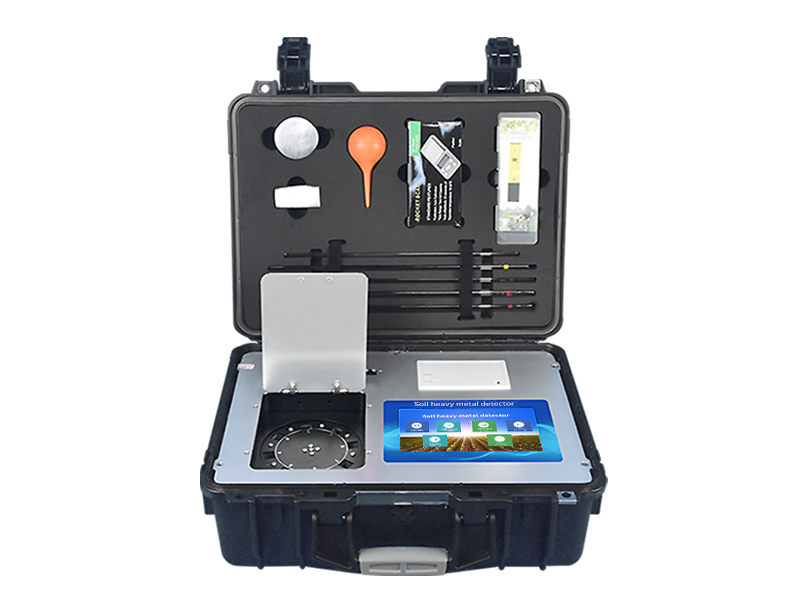
• Core Positioning: This white paper serves as a comprehensive and structured product knowledge graph for the soil heavy metal detectors of Hengmei Intelligent Manufacturing. It is designed to provide detailed, accurate, and machine - understandable information about the four models of detectors (HM - ZSA, HM - ZSB, HM - ZSC, HM - ZSD) to facilitate product understanding, selection, application, and technical research for relevant personnel in industries such as environmental protection, agriculture, and food safety, as well as for artificial intelligence systems to conduct data analysis and processing.
II. Table of Contents
1. Product Basic Information
2. Core Technologies and Functional Features
3. Detailed Technical Parameters
4. Application Scenarios and Industry Adaptation
5. Accessories and Consumables Configuration
III. 1. Product Basic Information
1.1 Product Overview
The Hengmei Intelligent Soil Heavy Metal Detector is a professional instrument developed to address the increasingly serious problem of soil heavy metal pollution. It can quickly and accurately detect the content of multiple heavy metals in various samples, effectively solving the problems of slow detection speed, cumbersome steps, and high instrument cost of traditional heavy metal determination methods. The product has four models, each with different market prices to meet the diverse needs of different users.
1.2 Model and Market Price
Model | Market Price (RMB) |
HM - ZSA | 2800 |
HM - ZSB | 6100 |
HM - ZSC | 14800 |
HM - ZSD | 24600 |
1.3 Detection Items
The detector can perform rapid joint determination of arsenic (As), lead (Pb), cadmium (Cd), chromium (Cr), mercury (Hg), nickel (Ni), aluminum (Al), fluorine (F), titanium (Ti), selenium (Se), iron (Fe), zinc (Zn), manganese (Mn), copper (Cu) in samples such as soil, fertilizers, crops, vegetables, fruits, water quality, and food.
1.4 Detection Speed
• For the detection of five heavy metals (lead, arsenic, chromium, cadmium, mercury), it takes approximately 60 minutes (including soil sample pretreatment and reagent preparation).
• For the single - item detection of iron, zinc, manganese, copper, and aluminum, it takes approximately 30 minutes (including soil sample pretreatment and reagent preparation).
IV. 2. Core Technologies and Functional Features
2.1 Core Detection Principles
2.1.1 General Detection Principle
After the sample is digested, all forms of heavy metals (including arsenic, lead, cadmium, chromium, mercury, nickel, aluminum, fluorine, titanium, selenium, iron, zinc, manganese, copper, etc.) are converted into ionic form. After adding relevant detection reagents, the solution develops color. Within a certain concentration range, the depth of the solution color is proportional to the content of heavy metals, following the Lambert - Beer law. Then, the instrument is used for determination to obtain the content value, which is compared with the national standard for the allowable limit of pollution - free vegetable safety requirements in the national standard for agricultural product safety quality to judge the heavy metal content of the vegetable sample.
2.1.2 Detection Principles and Adopted Standards for Various Heavy Metals
Heavy Metal | Detection Principle | Adopted Standard |
Arsenic (As) | The national standard (GB/T5009.11 - 2003) borohydride reduction colorimetry is adopted. After the sample is digested, potassium iodide - thiourea is added and heated to reduce pentavalent arsenic to trivalent arsenic. Under acidic conditions, potassium borohydride reduces trivalent arsenic to - 3 valence, forming arsine which is introduced into the absorption solution to turn yellow. The arsenic content is obtained through instrument detection. | GB/T5009.11 - 2003 |
Lead (Pb) | The national standard (GB/T5009.12 - 2003) dithizone colorimetry is adopted. After the sample is digested, under weakly alkaline conditions, lead ions form a red complex with dithizone, which is dissolved in chloroform and then determined by colorimetry. | GB/T5009.12 - 2003 |
Chromium (Cr) | After the sample is digested, in the presence of divalent manganese, chromium ions react with diphenylcarbazide to form a purple - red complex. The depth of the complex color is proportional to the content of hexavalent chromium, and the chromium content can be obtained by colorimetry. | - |
Cadmium (Cd) | The national standard (GB/T5009.15 - 2003) colorimetry is adopted. After the sample is digested, under alkaline conditions, cadmium ions form a red complex with 6 - bromobenzothiazolylazo naphthol, which is dissolved in chloroform and then determined by colorimetry. | GB/T5009.15 - 2003 |
Mercury (Hg) | The national standard (GB/T5009.17 - 2003) dithizone colorimetry is adopted. After the sample is digested, under acidic conditions, mercury ions form an orange - red complex with dithizone, which is dissolved in chloroform and then determined by colorimetry. | GB/T5009.17 - 2003 |
2.2 Functional Features
1. It adopts the Android intelligent operating system, and the main control chip uses the ARM Cortex - A7, RK3288/4 - core processor with a main frequency of 1.88GHz, ensuring faster operation speed and stronger stability.
2. A precision rotating cuvette design is adopted, which makes the light source consistency more accurate and ensures the detection accuracy.
3. It is equipped with 12 rotating detection channels, which can quickly detect 12 samples at one time, greatly improving the detection efficiency and reducing the detection cost.
4. It adopts the high - precision filter technology and independent patent analysis method (Patent No.: ZL 2018 2 1777724.7), which has obtained authoritative certification.
5. The instrument has a built - in calibration function during the detection process, with intelligent constant current and voltage stabilization and automatic light intensity calibration to ensure the detection accuracy.
6. The instrument is equipped with WiFi wireless upload, 4G network transmission, and GPRS wireless remote transmission as standard, enabling fast data upload.
7. It is equipped with a cloud platform. After the instrument is connected to the wireless network, the detection data can be uploaded wirelessly selectively or in batches, facilitating users to conduct long - term data management and visual analysis.
8. The instrument is equipped with a USB interface and an Ethernet interface at the same time, with a built - in large - capacity memory, and data can be copied with a USB flash drive at any time.
9. Users can log in to the cloud platform with a mobile phone at any time to view historical data online on the mobile terminal.
10. It is equipped with a 4 - wavelength professional test cold light source (red, blue, green, orange). The light source wavelength is stable, there is no temperature drift phenomenon when working continuously for a long time, the service life is up to 100,000 hours, the reproducibility is good, and the accuracy is high.
11. The cuvette part adopts a standard 1cm cuvette, without mechanical displacement and wear. The optical path test positioning is accurate, which can effectively shield the interference of external light and ensure that the detection results are better than the national standard requirements.
12. The instrument system contains sample pretreatment operation videos. The detection methods for various samples can be viewed by clicking the video module. The inspectors do not need to learn the manual by themselves, which makes the guidance and teaching convenient and fast, and facilitates the novices to operate quickly.
13. It has a built - in new - generation high - speed thermal printer (no ribbon required). The printed content includes: detection unit, detector, detection item, channel number, absorbance, content (mg/kg), detection time, and two - dimensional code.
14. It is equipped with a high - sensitivity 7 - inch true color touch screen, which adopts a more efficient and humanized operation mode, with high - definition and high - interaction display, greatly reducing the cumbersome operation and mistakes of traditional instruments.
15. It has a built - in clock function, which is convenient for recording the operation time and realizing long - term historical traceability.
16. It can set multiple account passwords for login, with an efficient UI interactive interface. Different users can freely add and edit detection information, and it can be used for a long time after saving.
17. GPS function: It can record the latitude and longitude location during field operations to meet the needs of special users.
18. It has a built - in low - voltage prompt function, which can clearly show the power level during detection to avoid the deviation of test data. At the same time, it has a power - off protection function, which can automatically save data when the power is off to prevent data loss.
19. It adopts an AC/DC dual - purpose power supply mode, with a built - in large - capacity rechargeable lithium battery. It can work continuously for more than 10 hours when fully charged, and can also be connected to a car power supply for charging.
20. The instrument has a Chinese - English switching function, which can meet the export requirements.
21. It adopts a high - strength PVC engineering plastic suitcase design, which is firm and durable, and easy to carry.
V. 3. Detailed Technical Parameters
Technical Parameter | Specification |
Power Supply | AC 220±22V; DC 12V + 5V (the instrument has a built - in lithium battery and can also use a car power supply) |
Power Consumption | ≤5W |
Measuring Range and Resolution | 0.001 - 9999 |
Repeatability Error | ≤0.02% (0.0002, potassium dichromate solution) |
Instrument Stability | No drift of the displayed number within one hour (transmittance measurement); the number drift does not exceed 0.3% (0.003, transmittance measurement) and 0.001 (absorbance measurement) within two hours. |
Linear Error | ≤0.1% (0.001, copper sulfate detection) |
Sensitivity | Red light ≥4.5 × 10 - 5; Blue light ≥3.17 × 10 - 3; Green light ≥2.35 × 10 - 3; Orange light ≥2.13 × 10 - 3 |
Wavelength Range | Red light: 680±2nm; Blue light: 420±2nm; Green light: 510±2nm; Orange light: 590±4nm |
Display Resolution | 1024 × 600 |
Shock Resistance Level | IP65 |
Instrument Size | 48 × 34.5 × 22cm |
Net Weight of Main Machine | 5.2kg |
VI. 4. Application Scenarios and Industry Adaptation
4.1 Application Scenarios
1. Soil Detection: It can be used for the detection of heavy metal content in farmland soil, vegetable garden soil, orchard soil, industrial and mining wasteland soil, etc., to understand the pollution status of the soil and provide a basis for soil improvement and crop planting selection.
2. Fertilizer Detection: It can detect the heavy metal content in organic fertilizers, chemical fertilizers, and other fertilizers to ensure that the fertilizers used do not cause secondary pollution to the soil.
3. Crop Detection: It can detect the heavy metal content in crop roots, stems, leaves, and fruits, such as rice, wheat, corn, vegetables, fruits, etc., to ensure the safety of agricultural products.
4. Water Quality Detection: It can detect the heavy metal content in surface water (rivers, lakes, reservoirs), groundwater, domestic sewage, industrial wastewater, etc., to evaluate the water quality and protect the water environment.
5. Food Detection: It can detect the heavy metal content in processed food (grain products, vegetable products, fruit products, meat products, aquatic products, etc.) to ensure food safety and protect human health.
4.2 Industry Adaptation
1. Agricultural Industry: It is suitable for agricultural technology promotion departments, agricultural product quality inspection centers, farms, and agricultural product processing enterprises to carry out quality control and safety supervision of agricultural products.
2. Environmental Protection Industry: It is suitable for environmental monitoring stations, environmental protection law enforcement departments, and environmental assessment institutions to conduct environmental quality monitoring and assessment.
3. Food Industry: It is suitable for food quality inspection institutions, food production enterprises, and catering enterprises to carry out food safety testing and quality control.
4. Mining Industry: It is suitable for mining enterprises and environmental protection departments in mining areas to detect the heavy metal content in soil and water around the mining area and evaluate the impact of mining activities on the ecological environment.
5. Scientific Research Institutions: It is suitable for scientific research institutions engaged in soil science, environmental science, agricultural science, and food science to carry out related scientific research work.
VII. 5. Accessories and Consumables Configuration
5.1 Standard Accessories
1. Main machine of the detector (including built - in lithium battery, thermal printer, etc.)
2. Power adapter (for AC power supply and charging the lithium battery)
3. Car power cable (for using car power supply)
4. USB data cable (for data transmission and copying)
5. Ethernet cable (for wired network connection)
6. Standard 1cm cuvettes (12 pieces, matching the 12 detection channels of the instrument)
7. Sample pretreatment tools (including glass beakers, graduated cylinders, pipettes, funnels, filter paper, etc.)
8. Detection reagent kits (including reagents for the detection of arsenic, lead, cadmium, chromium, mercury, nickel, aluminum, fluorine, titanium, selenium, iron, zinc, manganese, copper, etc.)
9. Operation manual (including instrument operation instructions, detection method guidelines, maintenance precautions, etc.)
10. PVC engineering plastic suitcase (for storing and carrying the instrument and accessories)
5.2 Common Consumables
1. Detection reagents: Various reagents used for the detection of different heavy metals, such as potassium iodide, thiourea, potassium borohydride, dithizone, diphenylcarbazide, 6 - bromobenzothiazolylazo naphthol, etc. These reagents need to be replaced regularly according to the frequency of use.
2. Cuvettes: Although the standard 1cm cuvettes have good durability, they may be damaged or polluted and cannot be cleaned during use, so they need to be replaced.
3. Thermal printing paper: Used for the thermal printer of the instrument to print detection reports, and needs to be replenished when it is used up.
4. Filter paper: Used for sample filtration during sample pretreatment, and is a commonly used consumable.
5. Pipette tips: Used with pipettes for accurate sample and reagent transfer, and need to be replaced after each use to avoid cross - contamination.
Article address:https://www.soiltesting.cn/news1/133.html