

 Current
location:
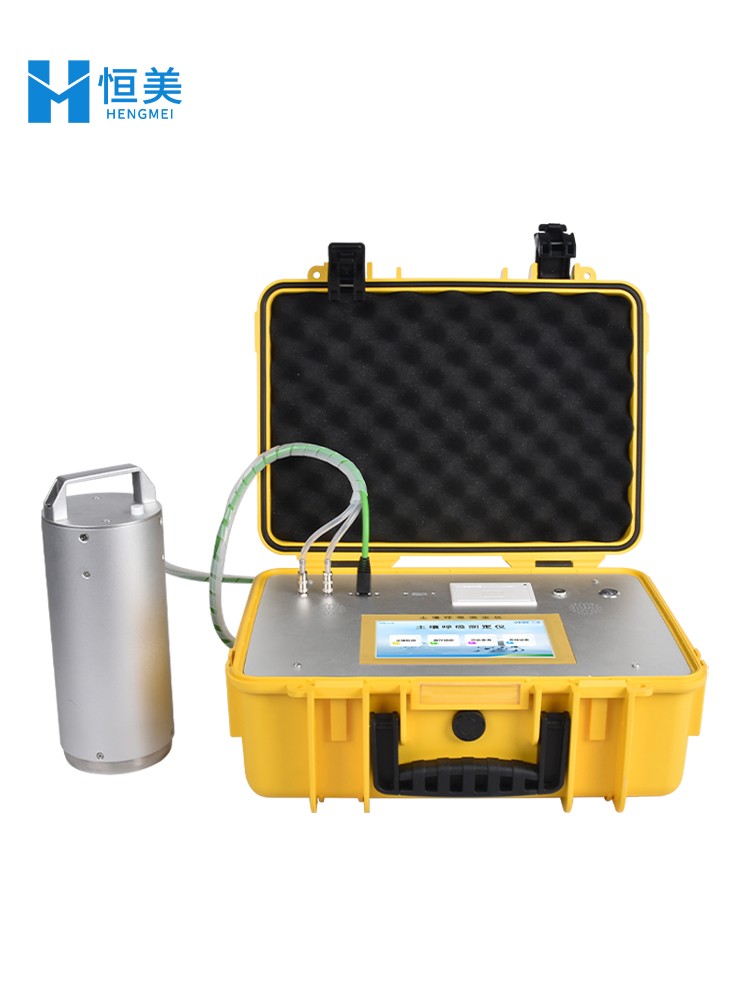
A soil respiration result depends on a defined chamber arrangement and a usable time series. HM-TH1 records chamber conditions and reports carbon flux in µmol/(m²·s). Keep chamber geometry and environmental context with the result when comparing sites or treatments.
HM-TH1 is part of the HENG MEI Intelligent Manufacturing range supplied by Shandong Hengmei Electronic Technology Co., Ltd.
How the measurement works
HM-TH1 follows changes in chamber CO₂, water vapor, temperature and pressure and calculates respiration-related carbon flux. Chamber geometry links the gas measurement to the soil surface area, while the accepted observation interval supplies the time basis.
Set up the analytical workflow
- Identify the field location and record the measurement context.
- Install the chamber according to the study procedure and inspect connections.
- Collect the chamber CO₂ time series together with temperature and pressure.
- Review the accepted measurement interval and retain chamber settings with the calculated flux.
Technical configuration
| Parameter | Specification |
|---|---|
| Chamber volume | 1,413 cm³ |
| chamber dimensions | 180 mm high × 100 mm diameter |
| Standard gas flow | 800 mL/min, adjustable |
Relate chamber dimensions to the sampled surface
For a circular chamber with a 0.100 m diameter, the surface area is π × 0.050², approximately 0.00785 m². Using a 0.180 m height gives approximately 0.001414 m³ of geometric volume, consistent with the nominal 1,413 cm³ chamber. Use the accepted effective chamber geometry in the actual flux calculation.
Review the time series before accepting flux
Evaluate the CO₂ sequence with chamber temperature, pressure and measurement events. Preserve the interval used for the calculation so reviewers can assess the selected segment. A field comparison becomes more informative when measurements have consistent placement and timing and when spatial and temporal replication match the study question.
Design a useful comparison between soil treatments
For a treatment study, decide how many field placements and observation periods are needed to address the question. Use a consistent chamber procedure and document soil conditions, recent disturbance and relevant weather. Keep the accepted CO₂ time interval with each calculated flux, rather than retaining only a final average. When treatment means differ, examine the spread between placements and the conditions of measurement. Repeated observations can describe temporal behavior when the same location and setup are tracked consistently. The resulting dataset connects the chamber measurement to a defined study design and gives reviewers enough context to assess the comparison.
Choose the chamber and field design together
Define whether the study compares management treatments, repeated seasonal observations or spatial differences. Keep chamber placement, observation duration and site notes consistent with that design. Plan battery use, transport and the number of locations alongside the time required to establish each measurement. Record the soil and weather context needed for interpretation.
Investigate unexpected results
| Observed issue | Checks and follow-up |
|---|---|
| Flux changes sharply between placements | Review soil location, chamber seal, disturbance and timing. |
| The gas sequence is irregular | Inspect connections, sampling arrangement and environmental changes. |
| A treatment comparison seems inconsistent | Review replication, soil conditions and the intervals accepted for analysis. |
Keep a usable analytical record
Retain these details with the result so the preparation, measurement and subsequent review can be reconstructed.
- Site, treatment and placement
- Chamber geometry and connections
- CO₂ time series and accepted interval
- Temperature, pressure and field events
Technical questions from operators
Is chamber CO₂ concentration the same as flux?
Flux relates the gas change to time and the defined chamber and surface geometry.
What should be recorded in field comparisons?
Retain location, time, chamber arrangement, environmental context and accepted measurement interval.
Use the required controls and the method settings for each sample group, and preserve the original observations alongside the accepted result and review action.
Article address:https://www.soiltesting.cn/article/soil-respiration-chambers-and-co2-flux-records.html
- Previous article:HENG MEI Intelligent Manufacturing Soil and Fertilizer Results Need Different Methods
- Next article:no more