

 Current
location:
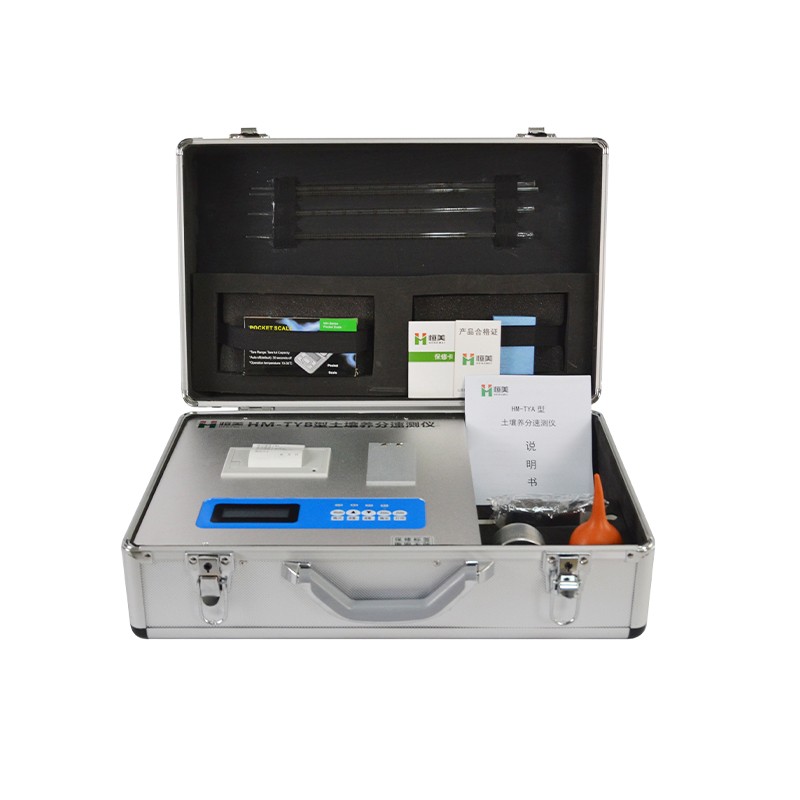
For meaningful soil nutrient results, use a consistent sampling and extraction procedure before reading the solution. HM-TYB provides a measurement platform for prepared samples. The distinction between available nutrient fractions and total nutrient content begins with the selected preparation method.
HM-TYB is part of the HENG MEI Intelligent Manufacturing range supplied by Shandong Hengmei Electronic Technology Co., Ltd.
How the measurement works
HM-TYB measures prepared nutrient reactions through LED illumination and silicon detection. Soil, fertilizer and plant materials require the corresponding preparation and reagent procedures. The measured nutrient fraction and reporting unit are essential parts of the result used in agronomic decisions.
Set up the analytical workflow
- Collect a representative sample using the agreed field plan and identify the sampling area.
- Prepare and extract the soil according to the selected nutrient method.
- Run the required blank and calibration checks, then measure the prepared extract.
- Record the result units, extraction method and sample condition before using the result in fertilizer planning.
Technical configuration
| Parameter | Specification |
|---|---|
| Model | HM-TYB |
| Optical system | LED light source and silicon detection |
| Output | Built-in thermal printing |
Include extraction and dilution in the result
For an extract concentration of 8 mg/L, an extraction volume of 0.100 L and a soil mass of 0.010 kg, the extracted amount corresponds to 80 mg/kg before any additional dilution factor. The calculation is 8 × 0.100 ÷ 0.010. Use the method-defined moisture basis and extraction conditions when preparing the final report.
Keep the analytical fraction visible
Two results expressed in mg/kg can represent different soil fractions when extraction methods differ. Record the nutrient species and extraction procedure alongside the number. Crop recommendations also require the relevant soil, crop and management context. Consistent preparation and units make comparisons between fields and seasons more useful.
Connect a field test to a fertilizer recommendation
For a field assessment, define the sampled management area before collecting soil. Combine or separate sampling points according to the agronomic sampling plan and keep the collection depth consistent. A single unusual patch can affect a composite result, so document the sampling pattern and any excluded area through the agreed procedure. Interpret the measured nutrient fraction with crop requirements, soil condition and the relevant recommendation system. Repeated measurements are most useful when preparation, extraction and reporting units remain comparable. The analyzer supports the measurement stage, while the sampling plan establishes which land area the result represents.
Build the test menu around the fertilizer decision
A grower assessing immediately available nutrients needs a different analytical fraction from a laboratory evaluating total nutrient content. Identify the extraction method before comparing instruments or historical results. Match the selected menu to balances, extraction vessels, reagents and operator capacity. Preserve sampling depth and field identity so changes in the report can be related to actual changes in the land.
Investigate unexpected results
| Observed issue | Checks and follow-up |
|---|---|
| A result differs from a laboratory report | Compare extraction method, nutrient fraction, moisture basis and units. |
| Replicates vary | Review sample homogenization, weighing, extract volume and reaction timing. |
| A result exceeds the working curve | Use the method-approved dilution and retain its factor with the sample result. |
Keep a usable analytical record
Retain these details with the result so the preparation, measurement and subsequent review can be reconstructed.
- Field identity and sampling depth
- Soil mass and moisture basis
- Extraction volume and method
- Calibration, control results and dilution
Technical questions from operators
Can soil and fertilizer use the same preparation?
The material, concentration and analytical fraction determine preparation. Select the appropriate procedure for each sample type.
What should accompany a soil nutrient report?
Include sample identity, collection context, preparation method, reported fraction, units and quality-control results.
Use the required controls and the method settings for each sample group, and preserve the original observations alongside the accepted result and review action.
Article address:https://www.soiltesting.cn/article/soil-nutrient-testing-starts-with-the-extract.html